Food & Beverage Manufacturing ERP Software
- Manage batch-based production, material requirements and production planning from one system.
- Track inventory, batch and expiry information across warehouses and production locations.
- Customize workflows, reports and modules to match your food manufacturing processes.
Food & Beverage Manufacturing ERP for Connected Production
Food manufacturing involves much more than managing production orders. Raw material availability, recipes and BOMs, batch production, inventory, quality checks and finished goods all need to stay connected throughout the process. When these activities are managed separately, it becomes harder to track material requirements, production status and inventory accurately.
TheERPHub brings these processes together through food and beverage manufacturing ERP software designed to support day-to-day manufacturing operations. Production teams can plan manufacturing based on sales requirements, calculate material needs through MRP, manage BOMs and monitor work-in-progress, while inventory and procurement teams can work with the same information.
Manage the Complete Food Manufacturing Process with TheERPHub ERP
Food manufacturing involves several connected activities, from purchasing ingredients to producing, checking, storing and dispatching finished products. The ERP system should keep these activities connected so that production and inventory teams are working with the same information.
Production Planning
Plan manufacturing based on sales orders, material availability and production requirements. Production plans can relate to MRP to determine the materials needed before manufacturing begins.
Recipe and BOM Management
Maintain product BOMs and define the materials and processes required for manufacturing. This helps production teams estimate requirements and maintain consistency across planned production.
Batch and Inventory Management
Maintain detailed inventory records and monitor material movement through receipt, issue, transfer, production and return. Batch and expiry information can provide greater visibility into raw materials and finished products.
Quality Management
Connect quality checks with relevant manufacturing and inventory activities so production and quality teams can work with consistent information throughout the process.
MRP and Procurement Planning
Use production requirements and available stock to identify material shortages and support purchase requisitions. This helps procurement teams prepare materials before they are needed on the production floor.
WIP and Production Visibility
Track materials and products moving through different manufacturing stages and get a clearer view of production progress, pending work and completed output.
Food & Beverage Manufacturing ERP Modules
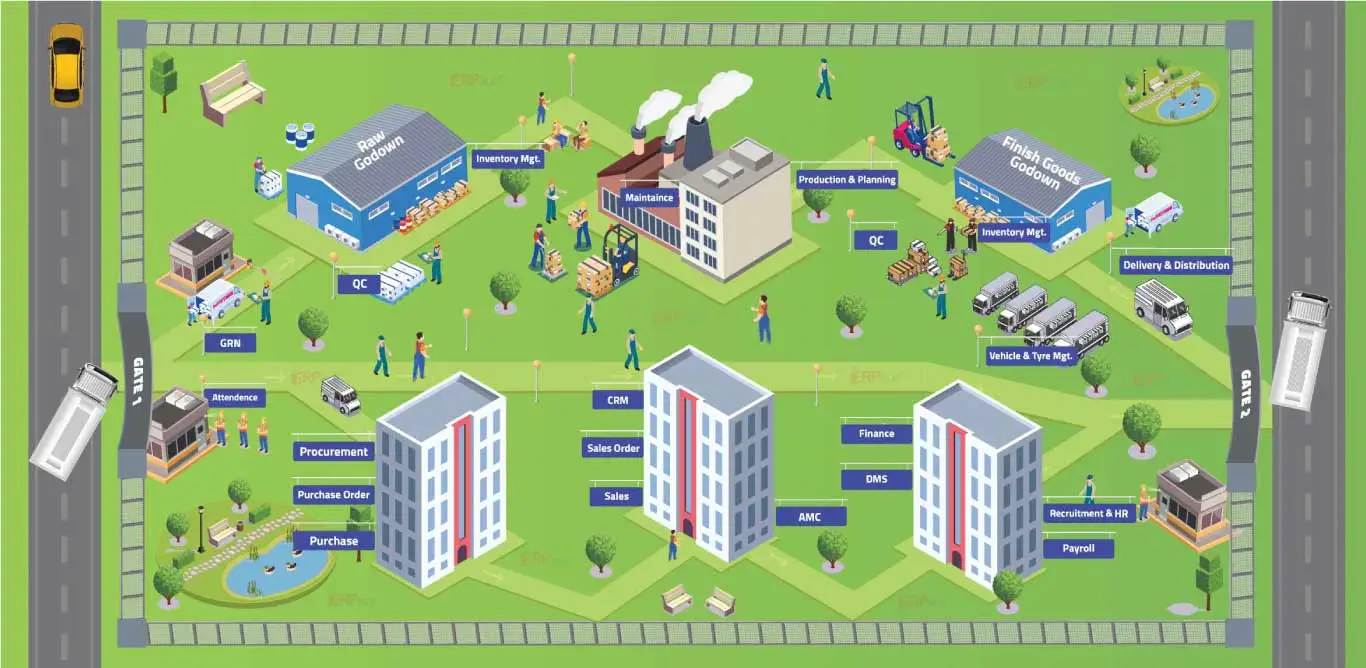
TheERPHub brings production, inventory, procurement, quality, sales and finance together through integrated ERP modules. Instead of maintaining separate records for purchasing, production, stock and accounting, food manufacturers can manage connected processes through one system. The modules can be configured according to the way your business operates, whether you manufacture packaged food, processed products, beverages or other food-related products.
CRM
Sales Order Management
Delivery & Distribution
Sales
Procurement Management
Inventory & Quality Control
Purchase
Finance
Material requirements planning (MRP)
Simple Production Planning
Advance Production Planning
Annual Maintenance Contract
Document Management (DMS)
Notification & Communication
HR & Recruitment
Attendance
Payroll
Exim (Export) Modules
Purchase import
Add-on Modules
Review of Our Happy Customer
Our Customers Love
Vpower Equipment
We’re really satisfied with how TheERPHub ERP has improved our business operations. The user-friendly design and modules have made our daily tasks so much easier. From production planning to real-time reporting, everything is well integrated. The most impressive part for us has been the professional support and the smooth implementation. We are very happy with the results.

Founder
Jagan Mushroom
Running a mushroom unit comes with a lot of things to handle daily. TheERPHub has brought everything into one system, which saved us both time and confusion. The team is very humble and always helps without delay.
Manager
R.K. Decorators
TheERPHub ERP really simplified our day-to-day operations at R.K. Decorators. From event orders to payments, everything is more organized & so easy to use. Big shoutout to their support team!

Director
Vital Electrocomp
I have been working with Sharmilbhai for 3 years, and life has become much easier with the cloud ERP software. The ERP itself is self-explanatory and user-friendly. Thanks to this system, 75% of our documentation has transitioned online, and we aim to be fully online within one year. The team at TheERPHub is technologically advanced and possesses a deep understanding of manufacturing processes, ensuring they stay up-to-date with the latest technology trends.

Managing Director
Nachiket Procon Pvt. Ltd.
Great ERP Product! Friendly and flexible for changes!! Must experience service!! It is truly a fantastic cloud-based ERP software product that offers a great user experience. The software is incredibly friendly and flexible, especially for cloud-based ERP solutions. The service provided by the team is prompt and offers helpful assistance whenever needed. Overall, a must-experience service for any organization in need of a reliable and feature-rich cloud ERP solution!
Director
Digital Press
Highly user-friendly software that delivers a satisfying experience, The intuitive interface makes navigation a breeze, allowing users of all levels to adapt quickly.

Proprietor
Edutech Learning Pvt. Ltd.
The company excels with innovative cloud ERP software solutions in India. We've had a longstanding relationship with them for years. Their cost-effective, well-supported cloud ERP solutions set them apart. Their ERP is a fantastic tool that has significantly benefited our operations. We highly recommend this cloud-based ERP solution to others. Here's to continued success for this outstanding cloud ERP software and the company behind it!

Director
Vital Electrocomp
I've been working with Sharmilbhai for 3 years, & life has become much easier with cloud ERP software. He's prompt & knowledgeable, & the ERP itself is self-explanatory & user-friendly. Thanks to this system, 75% of our documentation has transitioned online, & we aim to be fully online within one year. The team at TheERPHub is technologically advanced & possesses a deep understanding of manufacturing processes, ensuring they stay up-to-date with the latest technology trends.
Production Head
Ganesh Engineering Co.
One of the best ERP provider in the market. Kuddos to the team

Director
Sharma Equipements
Best Software Provider Company, I've worked with Sharmilbhai and team, they are so smart and problem solver.

Purchase Head
RK Creative
The software is extremely user-friendly, making it easy for all our employees to use and benefit from.
Proprietor















Other Manufacturing Industries ERP
Customization ERP Software
Let application Works for you rather Than
you work according to the application.
Every food manufacturing business has its own production processes, approval requirements, reporting structure and operational workflows. A standard ERP setup may not always match these requirements without modification.
TheERPHub provides ERP customization based on the specific processes of a business. Existing modules can be modified, workflows and fields can be adapted, and additional functionality can be developed when required.
The objective is to configure the ERP around the manufacturer's actual working process rather than forcing every business to follow the same workflow.
Food & Beverage Manufacturing ERP Software Mobile Application
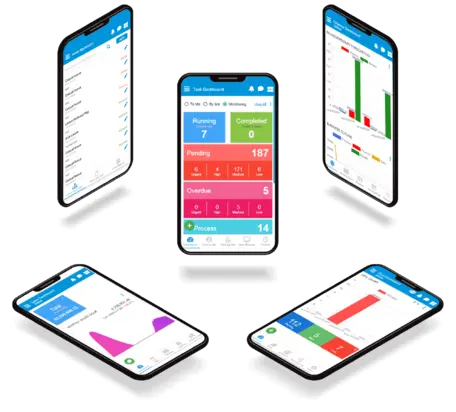
Access important ERP information from your mobile device, whether you are on the factory floor, in the warehouse, at the office or away from the business. Monitor production status, check stock availability, review sales and payment information and stay updated on key activities without being tied to a desktop.
TheERPHub mobile application keeps food and beverage manufacturing ERP software accessible when you need it, helping managers and teams respond to production, inventory and business requirements faster.
Our ERP Software`s Advanced Features
Each feature adds more structure to your workflow and helps you stay updated, reduce manual work and keep your day running without delays.
-
Dynamic Multi Dashboard
-
Widgets & Charts
-
MIS Reports
-
Work Automation
-
Follow-Up Using Mobile App
-
To-do Lists
-
Print and Export Documents
-
Smart Lead Generation Via Email Reading
-
User Defined Vouchers
-
Approval Notification
-
Auto Email With Configuration
-
Dynamic Calender View with Sharing
-
Email / WhatsApp / SMS Integration
-
Comments & Bookmarks
-
Announcements
-
Resume collection via Email Reading
Advantages of ERP Software for Food Manufacturing in India
Food manufacturing involves closely connected activities such as raw material planning, procurement, production, inventory, quality control and order management. An integrated ERP system brings these processes together, giving teams better visibility into material availability, production requirements, stock levels and business transactions.
TheERPHub provides food and beverage manufacturing ERP software with capabilities such as MRP, production planning, inventory management, procurement, quality management, sales and finance. Its cloud-based ERP setup allows businesses to access relevant information across locations while supporting the operational requirements of growing food manufacturing businesses.
- Bring production, inventory, procurement, sales and financial data together in one system for better visibility.
- Use sales requirements, BOMs and material availability to plan production and coordinate manufacturing activities.
- Monitor stock across locations with better visibility into material movement, availability and inventory status.
- Identify material requirements in advance and coordinate purchasing with planned production.
- Automate routine processes and reduce duplicate data entry across departments.
- Give authorized users access to current production, inventory, sales and financial information when they need it.
- Connect production, stores, procurement, sales, quality and finance so teams can work with consistent information.
- Adapt ERP workflows, modules and reports as business processes and operational requirements change.
Automation
This is having Automation features. So It will make fully automate your business & production process. Also Will reduce the amount of time it takes to complete production tasks, as well as reduce the amount of manual labor required.
Flexibility
Our ERP software has full flexibility features. Our software can be customized to meet the specific needs of each company and customize the software to your specific production processes.
Scalability
This has scalability features so you can use it according to your future needs. this is one of the most crucial elements of your enterprise software.
Increased Accuracy
This ERP increases accuracy in production. The software tracks various processes involved in manufacturing, such as the number of parts used, the time spent on each task, and the quality of the finished product.
Improved Efficiency
This improves the efficiency of production processes through Our ERP. This can help in streamlining various processes involved in manufacturing, thereby improving efficiency.
Streamlined Processes
Make Streamline Processes with our ERP Software's advanced features. also, predict production timeline and upcoming order delivery time. its keeps track of process inventories and time consumed by Machines and Labours.
Real Time Information
ERP is designed with comprehensive features such as quick Real Time report.You can access modified data immediately, So it makes your business well organized.
Cloud Based ERP
Cloud ERP is Software as a Service (SaaS), Users can access the Enterprise Resource Planning application over the Internet.
Fast and Affordable
Easily access all the necessary feature to make business smooth at one centralized system for a low cost.
Customized Solutions
Different business different requirements, To scale your business, we can tailor your need into TheERPHub Application.
Auto Backups
Business data is too crucial, so automatic data backup is set for every 24 h. Data Redundancy is set for 3 storage drives.
Online / Offline Support
For successful implementation of ERP, we provide remote support, phone support and offline support.
Accessible Anytime, Anywhere
We can access ERP anytime on any kind of device.
Mobile Applications
Every Module is having individual Mobile Application.
No Maintenance
No installation, no specific hardware required, run from any browser enable devices.
Advance Security Features
This is designed with highly Advanced security features. There is a whole team working to maintain the security system at its best. This has Security features such as Database Security, File Storage Security, Accessing Resources, User Rights, Access Logs, and IP Restrictions.
Secure and Reliable
Key security features which prevent unauthorized access to the web and mobile applications are User Rights, IP Restrictions, Accessing Resources, User Rights, Access Logs,and hourly-based record editing options. we used the worlds best cloud to host your data safely.
Benefits of On-Premise ERP Software
-
On-premise ERP software offers many advantages for any organization, such as improved efficiency, cost savings, scalability, and decreased long-term costs.
-
Advantages of on-premise software include having complete control of your data backup system with no internet access required to access it.
-
On-premise ERPs provide more security than cloud-based software systems as all information is kept safe on an organization's own servers and only authorized personnel have access to it.
Benefits of SaaS Based ERP Software
-
One of the primary advantages of SaaS-based ERP software is its cost-effectiveness compared to on-premise solutions, particularly maintenance and upgrade costs which tend to be far less.
-
SaaS-based ERP software does not require purchasing hardware or software and is simple to set up and use.
-
Businesses of all kinds can reap numerous advantages from adopting such software solutions, from cutting costs and saving both time and money to cutting time off their workflow.
FAQ
A food manufacturing ERP should cover more than basic accounting and inventory management. It should connect production planning, procurement, inventory, batch management, quality control, sales and finance in one system. Features such as BOM management, material requirements planning, batch and expiry-wise stock management and WIP tracking can be particularly useful for food processing businesses. The right ERP should also be flexible enough to match the company's actual production and reporting processes.
Yes. ERP software can help manufacturers plan and record batch-based production, from material estimation and issue to production and material return. TheERPHub supports batch planning, BOM-based material estimation, material issue, material production and material return. Batch-related inventory and quality information can also be maintained within the connected ERP system.
Batch and expiry-wise inventory helps food manufacturers maintain more detailed control over raw materials and finished products. TheERPHub supports batch and expiry-wise stock management along with location-wise inventory, goods receipt, stock transfers and physical stock verification. This makes it easier for teams to identify available stock and monitor materials based on their batch and expiry information.
Yes. Sales orders can be used as an input for production planning and material requirement calculations. TheERPHub supports production plans based on sales orders and can use BOM information to estimate the materials required for manufacturing. This helps sales, production and procurement teams coordinate around actual order requirements.
Food manufacturers often have different production workflows, approval processes, reports and operational requirements. TheERPHub supports ERP customization, including modifications to existing modules, workflows, fields and reports, as well as development of additional functionality where required. This allows the system to be adapted to the company's actual way of working.
ERP can help manufacturers compare planned material requirements with actual material issues, production and returns. TheERPHub records material requirements through BOMs and MRP and supports material issue, production and return processes. These records give management better visibility into material usage and can help identify areas where actual consumption differs from planned requirements.
Yes. A centralized ERP can maintain inventory information across different warehouses, plants or business locations. TheERPHub supports site and godown-wise stock management along with stock transfers and other inventory transactions. This gives management a consolidated view while allowing teams to work with location-specific inventory information.
Yes. Manufacturers can maintain different BOMs and product configurations according to their individual products and manufacturing requirements. This is useful for businesses producing different sizes, grades, variants or formulations where material requirements may differ. TheERPHub can be customized to accommodate different workflows and business requirements where the standard process needs modification.
